Computer Simulations Provide the Best Explanation for Those "Little Red Dots" Yet!
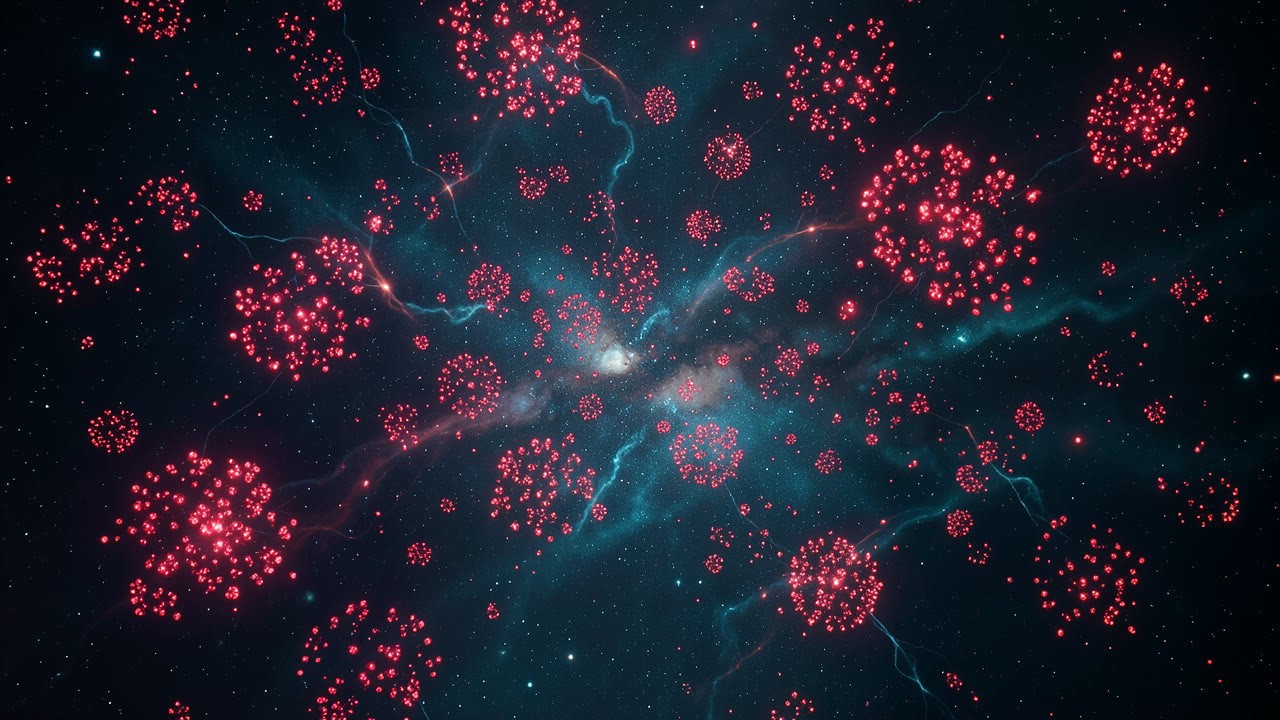
The James Webb Space Telescope (JWST) observed numerous galaxies with unusual properties, earning them the nickname "Little Red Dots" (LRDs). These galaxies are bright, red, and far more abundant than cosmological models predicted. Scientists considered various theories, including compact star clusters, supermassive stars, and Direct Collapse Black Holes (DCBHs), but new simulations by an international team suggest they could be remnants of supermassive primordial stars. The study, led by Dr. Daniel Whalen from the University of Portsmouth, was published in The Astrophysical Journal Letters. The simulations show that LRDs are likely AGN-powered by black holes formed through the collapse of supermassive primordial stars. The black holes are largely concealed by dense gas disks, which trap high-energy X-rays while allowing some light to escape, matching the observed light signatures. The simulations also explain the blue part of the spectrum, attributed to dense star clusters in the disks of these galaxies. The black holes are estimated to be about 10 million Solar masses, which is significantly less than previous estimates. This research offers the most fitting explanation for the observed properties of LRDs, suggesting the first supermassive black holes may finally be visible.
AI-generated summary of the original article — see the source for the full story.
Aired in the broadcast of November 18, 2026 · transcript

Log in to join the discussion.