Secret Pentagon UFO hunt drew blueprints for hidden Nevada bunker to store ‘exotic’ materials
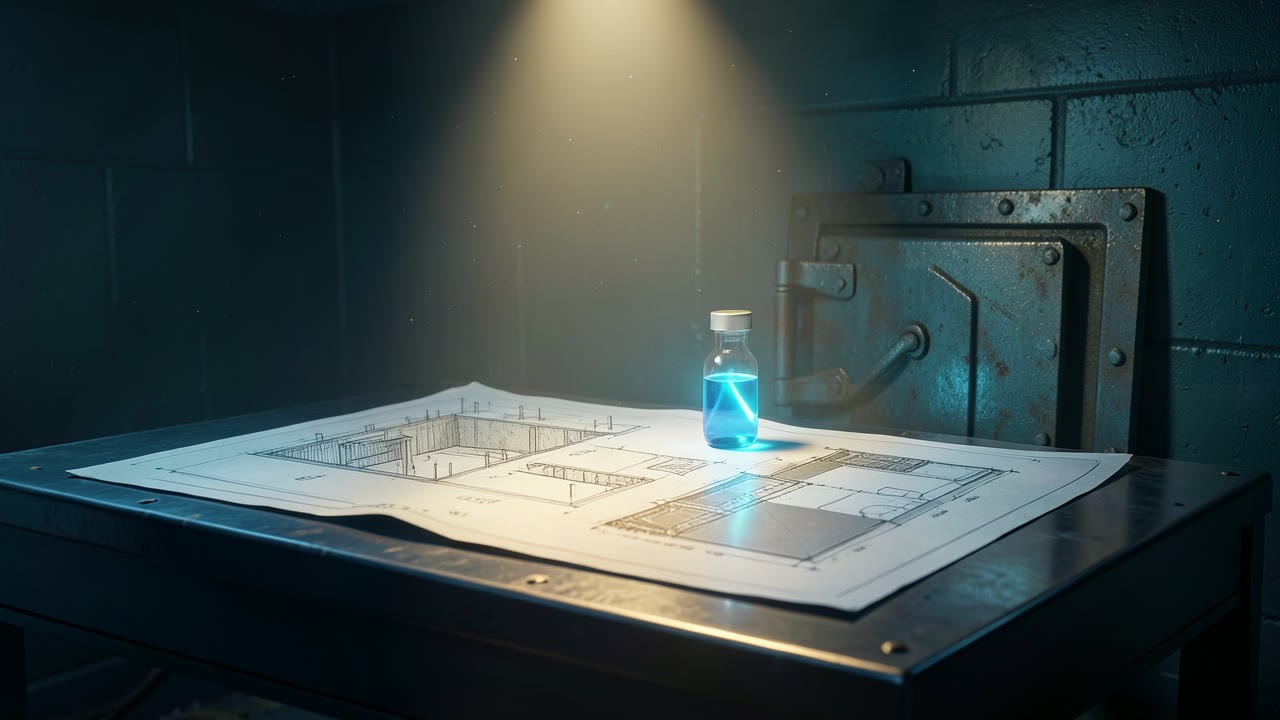
A Pentagon contractor drew up plans for a 5,000-square-foot underground bunker in Nevada to store "exotic material or tissue," including recovered hardware and biological samples tied to unidentified anomalous phenomena (UAP). The blueprint was part of a declassified report released as part of the Trump administration's UAP records, revealing how close a private firm came to building a secure repository under a $22 million Pentagon program. The report details the Advanced Aerospace Threat Identification Program, which was launched in 2008 to study foreign aerospace threats. The bunker was designed with multiple security doors, a concrete access tunnel, and extensive camouflaging of protruding components.
The contractor, Bigelow Aerospace Advanced Space Studies (BAASS), was awarded the contract in 2008 and began transforming a nondescript building into a fortified compound. By May 2009, BAASS had hired 47 employees and was shopping for additional office spaces to house a laboratory and storage facility. The program was pushed behind one of the military's highest secrecy walls to avoid broader scrutiny. The Pentagon's then-Senate Majority Leader, Harry Reid, proposed a 14-person "Bigoted Access List" to limit knowledge of the program to a handful of pre-approved officials. The report also mentions that BAASS paid outside scientists to write 26 research papers on sci-fi concepts, including warp drives and invisibility cloaking.
The DIA initially praised the papers as solid academic surveys but refused to classify the program, citing federal regulations that prohibit classification for basic scientific research. DIA Director Letitia Long later rejected Reid's secrecy request, noting that the contractor had not established a secure facility. The program was eventually moved out of the DIA, and the reports were deemed of limited value to the intelligence agency. The article highlights the tension between the Pentagon's interest in UAP research and the need for secrecy, as well as the challenges faced by contractors in maintaining classification and access control.
AI-generated summary of the original article — see the source for the full story.
Aired in the broadcast of November 27, 2026 · transcript

Log in to join the discussion.