Dark matter–hunting satellite Euclid reveals record number of cosmic 'magnifying glasses'
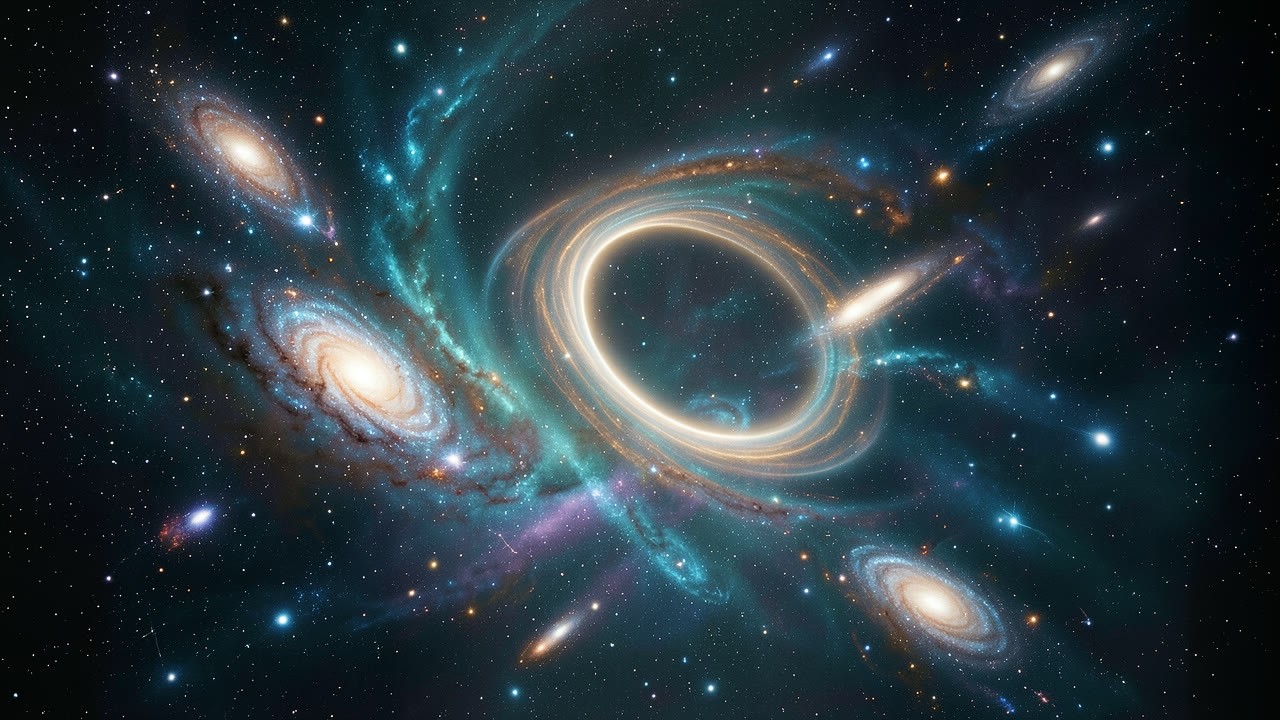
The European Space Agency's Euclid satellite has discovered 15,000 new strong gravitational lenses, the largest collection of these cosmic tools that help astronomers investigate dark matter. The first major release of data from Euclid comprises 1.7 million gigabytes of data, and analysis by a global consortium of over 2,000 scientists, including more than 30 Canadians, revealed more than 900 million galaxies and 60 million quasars across almost 5% of the entire night sky. The discovery is based on 13 months of observation, and the odds of finding a strong lens were previously about 1 in 10,000. The new catalog is larger than all previous collections of strong gravitational lenses combined.
- "Strong lenses have been difficult to find—the odds were about 1 in 10,000," said co-author Hrishabh Srivastava, a doctoral student in the UBC department of physics and astronomy (PHAS). "Before Euclid, we had fewer than 1,000 confirmed strong lenses. Now we have 15,000 new candidates."
- The Euclid satellite, launched in 2023 at a cost of more than $1 billion, aims to map more than one-third of the sky to build a 3D map of the universe, which would help scientists determine the properties of dark energy and dark matter on a universal scale.
- Dark energy and dark matter remain two of the greatest mysteries of modern physics despite making up about 95% of the universe. Dark energy is an unknown force pushing the universe apart and observed only by the accelerating expansion of galactic objects away from each other in all directions. Dark matter is some form of invisible, unknown matter that we can only detect through its gravitational effects—including the bending or "lensing" of light.
The new catalog is larger than all previous collections of strong gravitational lenses combined. Because the observations were gathered by the same telescope and analyzed using the same methods, researchers can compare them more reliably than ever before. Srivastava will attempt to estimate the dark matter distribution of the universe. He also aims to build a machine-learning model strong enough to identify strong lenses without verification. The four-part process involves machine learning to initially parse the huge amount of data for likely lenses. Then, thousands of citizen scientists pore over the AI-sorted data to further refine the candidate pool. Third, experts including Srivastava check the citizen scientists' work, looking at about 6,000 to 10,000 galaxies each. The final step involves verifying that the candidates are indeed lenses using follow-up data with other telescopes.
Gravitational lenses can also be used to investigate dark energy by plugging their parameters into the current cosmological model and seeing if the numbers match. They also magnify the background galaxy for a clearer picture. Srivastava was part of the team finding gravitational lens candidates. The data release, described in 26 papers submitted to the journal Astronomy & Astrophysics today, also includes spectra from more than 160 million sources. Scientists can use the dataset to determine distances to galaxies and place them into the 3D structure of the universe, building a giant map. The current dataset covers about 14% of the total sky area Euclid will survey in its six years of service.
AI-generated summary of the original article — see the source for the full story.
Aired in the broadcast of November 16, 2026 · transcript

Log in to join the discussion.