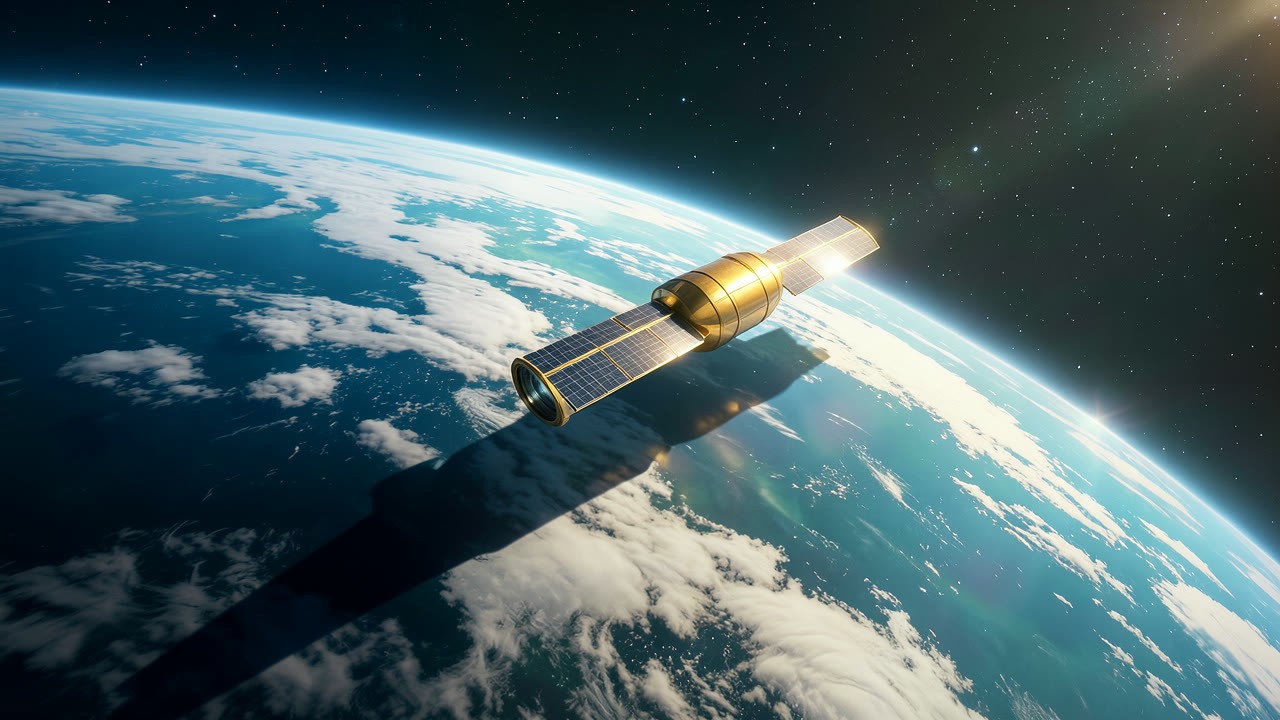
NASA's Europa Clipper zooming by Earth on way to Jupiter's icy moon
NASA's Europa Clipper is set to fly by Earth in December 2026, using the planet's gravity to save propellant and prepare for its journey to Jupiter's icy moon. The spacecraft will come within 1,950 to 2,133 miles of Earth, with its closest approach west of Africa. The flyby will allow scientists to calibrate instruments and gather data, marking a crucial mission milestone. The mission will use Earth's gravity to slingshot the spacecraft toward Jupiter, where it will begin orbiting the gas giant in April 2030. The Europa Clipper will also be observable with relatively large hobby telescopes near the closest approach trajectory.
The Europa Clipper's instruments will be activated during the flyby, with the Magnetometer specifically aiming to study Jupiter's magnetic field and confirm the presence of an ocean beneath Europa's ice. The E-THEMIS instrument will scan Earth every eight hours, tracking warm regions on Europa to determine where water may have erupted onto the surface. The science team will compare Earth observations from the Europa-UVS instrument with those from the Lunar Reconnaissance Orbiter mission to better understand Europa's atmosphere and surface. The flyby will also provide an opportunity to refine the spacecraft's instruments and practice operations.
The mission's findings will help scientists better understand the potential for habitable worlds beyond Earth. The Europa Clipper will use Ganymede's gravity to slow down and be captured by Jupiter's gravity, allowing it to determine the thickness of Europa's ice shell, investigate its composition, and characterize its geology. The flyby will also enable the calibration of the Magnetometer and other instruments, ensuring accurate data collection. The data collected during the flyby will be compared with existing Earth data to fine-tune instruments and improve science operations.
AI-generated summary of the original article — see the source for the full story.
Aired in the broadcast of November 26, 2026 · transcript

Log in to join the discussion.